
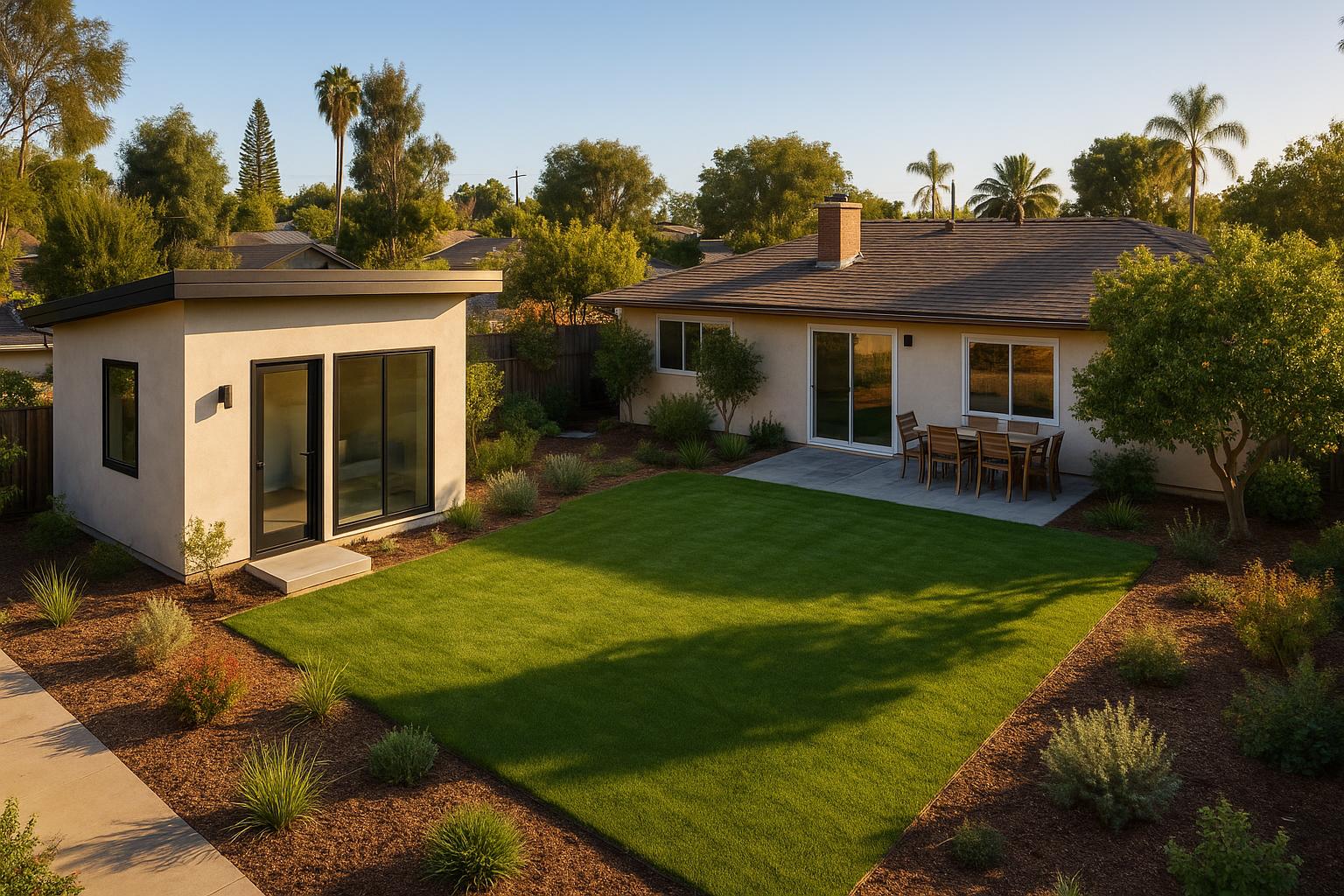
When You Need More Space, You Have Options
If you're a homeowner in San Diego feeling the squeeze — whether it's a growing family, aging parents who need a place nearby, or simply a desire for more functional living space — you've probably considered two popular solutions: building an accessory dwelling unit (ADU) or adding a traditional home addition.
Both options increase your usable square footage and can add significant value to your property. But they serve different purposes, come with different price tags, and involve different permitting processes. Understanding the distinctions can save you time, money, and a lot of headaches down the road.
Here's a detailed comparison to help you figure out which route makes the most sense for your home and your goals.
What Exactly Is an ADU?
An accessory dwelling unit is a self-contained living space located on the same lot as your primary residence. ADUs have their own entrance, kitchen, bathroom, and sleeping area. They can be detached structures in your backyard, converted garages, or even units built above an existing garage.
In San Diego, ADU construction has surged in recent years thanks to California state laws that have streamlined the permitting process and relaxed zoning restrictions. Neighborhoods like Mira Mesa, Scripps Ranch, and Rancho Peñasquitos have seen a particularly strong uptick in ADU projects because many properties in these areas have the lot sizes to accommodate them.
What Is a Home Addition?
A home addition is an expansion of your existing house. It could be an extra bedroom, a larger kitchen, an expanded living room, or even a second story. Unlike an ADU, a home addition is physically connected to your main home and shares its systems — plumbing, electrical, HVAC, and so on.
Home additions are ideal when you want to make your current home bigger without creating a separate living space. They're common in neighborhoods throughout Poway, Rancho Bernardo, and other parts of San Diego where homeowners love their location but have outgrown their floor plan.
Key Differences Between ADUs and Home Additions
Purpose and Functionality
The biggest difference comes down to independence. An ADU is a fully independent dwelling. Someone can live in it without ever needing to step foot in your main house. This makes ADUs ideal for:
- Rental income — long-term tenants or even short-term rentals where local regulations allow
- Housing aging parents or adult children who want privacy
- A dedicated home office or studio completely separate from your household
A home addition, on the other hand, expands your primary living space. It's best when you want:
- A bigger kitchen or primary suite
- An additional bedroom or bathroom for your family
- A more open floor plan or dedicated playroom, gym, or media room
Cost Considerations
Both projects represent a significant investment, but the cost structures differ. ADUs in San Diego typically range from $150,000 to $350,000 or more depending on size, finishes, and whether you're building new or converting an existing structure like a garage. Because an ADU requires its own kitchen, bathroom, plumbing connections, and electrical panel, the per-square-foot cost tends to be higher than a simple room addition.
Home additions generally cost between $200 and $500 per square foot in the San Diego market, depending on complexity. Adding a second story, for example, costs more than extending the footprint of a single-story home because of structural engineering requirements. However, because additions share existing systems, you can sometimes achieve more livable space for less money — as long as you don't need a separate kitchen and bathroom.
Permitting and Regulations
California has made ADU permitting significantly easier in recent years. Senate bills like SB 9 and AB 68 have reduced barriers, and the City of San Diego has created a streamlined review process for many ADU projects. In most cases, you won't need a conditional use permit, and setback and parking requirements have been relaxed.
Home additions still go through the standard building permit process, which can involve plan review, zoning compliance checks, and sometimes design review depending on your neighborhood. If you live in a community with a homeowners association — common in Scripps Ranch and Rancho Bernardo — you may also need HOA approval for exterior changes.
Return on Investment
Both options add value to your property, but in different ways. An ADU can generate ongoing rental income, which is attractive to future buyers and can help offset your mortgage. In San Diego's competitive rental market, a well-designed one-bedroom ADU can bring in $1,800 to $2,500 per month or more, depending on the neighborhood and finishes.
A home addition increases your home's appraised value by adding square footage to the primary residence. This is reflected directly in your home's sale price. According to national remodeling data, well-executed additions typically recoup 50% to 70% of their cost at resale, though San Diego's strong housing market can push that figure higher.
Timeline
ADU projects in San Diego generally take four to eight months from permit approval to completion, depending on whether you're doing new construction or a conversion. Home additions vary more widely — a simple bump-out might take three months, while a second-story addition could take six months or longer.
In both cases, the permitting phase can add several weeks to your timeline, so it's important to work with a contractor who understands San Diego's local building department and can navigate the process efficiently.
Which One Should You Choose?
The right choice depends on your goals. Ask yourself these questions:
- Do I want a completely separate living space? If yes, an ADU is the way to go.
- Am I looking for rental income? An ADU gives you that option. A home addition does not.
- Do I just need my house to be bigger? A home addition is usually more practical and can be more cost-effective for simply expanding your living area.
- What does my lot allow? Smaller lots may not have room for a detached ADU, making a home addition or garage conversion the better fit.
- What's my budget? If budget is tight, a smaller home addition or a garage conversion ADU might give you the most value for your dollar.
In many cases, homeowners in areas like Mira Mesa and Rancho Peñasquitos find that an ADU makes financial sense because of the rental income potential, while families in Poway or Rancho Bernardo may prefer a home addition that gives them the extra bedroom or expanded kitchen they've been dreaming about.
Get Expert Guidance for Your San Diego Project
Whether you're leaning toward an ADU or a home addition, the most important step is working with a remodeling team that understands both options inside and out. At Sterling Ridge ADU, we specialize in ADU construction, home additions, and whole-home remodeling throughout San Diego. We'll help you evaluate your property, understand your options, and build something that truly fits your life.
Ready to explore what's possible? Reach out to our team for a consultation, and let's figure out the best path forward for your home.